The ability to handle struggle or hardship can make or break you in this life. As we move through life, we inevitably come up against challenges of varying severity that leave us with one choice: grow or stagnate. I’d like to think that many of these challenges we encounter, setting aside the extreme and unjust situations that abound, are part of the job of life to form us into better, more resilient humans.
Unfortunately, many of today’s children living in America (not to ignore those who are struggling day-in-day-out with basic love and needs but to set them aside for a moment) don’t have much of a challenge. We live a very comfortable life (and this definitely ignores the loneliness epidemic many children face). And, while, there are many beautiful blessings of this lifestyle, there are arguably fewer and fewer opportunities for children to experience disappointment and sharpen their resiliency skills. Not to worry, though! I’ve compiled my best ideas to help you foster a well-loved and resilient child!

1. First and foremost, children need lots of love and attunement. That is not spoiling; it is essential to their ability to develop into a healthy and well human being. So, please, make sure you give your child abundant love and nurturing. This foundation of deep love along with a little guidance and modeling will be the framework they use to learn to move through hard things and thrive in this life.
2. This point piggybacks on #1, but do make sure your child’s well-being is well-supported first before you add in a little challenge. Adequate sleep, nutrient-rich foods, ample time for free play, social opportunity, limits on screen time, nature, faith practices, and sufficient downtime are all very essential to the child’s well-being. And, don’t be afraid of boredom! This is actually a huge gift to your child. The most creative of child thought and play emerges on a boring, rainy day.
3. Next, take an assessment of yourself. Be mindful of your own anxieties and traumas: how do these tempt you to insulate or protect your child? What are YOU afraid of? Don’t create a fortress around protecting your child from that. This sets them up for interpreting the world from a fear-based frame of reference. If you need to, get into counseling to work through your own mental blocks and traumas. This is a HUGE gift to both you and especially your resilient child.
4. Another point to focus on you, for as a parent goes, a child goes. Make challenging your own resiliency a practice. Do you have anything ‘hard’ that’s helping you grow? Maybe it’s a sport or exercise practice (within reason…doesn’t have to be extreme), hobby, spiritual practice, learning something new/out of your realm of expertise?
The best teacher of resiliency is the one who is also currently practicing it! Have you thrown in the towel and stagnated yourself??! Seriously, this is your sweet invitation to get up and make some powerful progress in your own life. Feeling stuck? Check out: 8+ Small Steps to Unstuck Your Life, Today! for some practical first steps.
5. Next up, model for your child how to navigate a broken and scary world. Let’s face it; there’s plenty around us that is alarming. And if we don’t, others (ahem, the internet and politics) will gladly step in and interpret this all for your child. You don’t want that! Your child will have to thrive as an adult in this world someday. Show them where the good, safe, and beautiful still remains. This wisdom and frame of reference will soothe and comfort them for a lifetime.
6. Similarly to #5, model healthy reactions to real life events for your kids. Acknowledge, don’t erase, emotions, but then show a way forward with that experience of emotion. For example, don’t brush off bumps and bruises to avoid crying. I see this all the time with well-meaning parents. Instead, acknowledge the pain and validate the emotion/response. Then, offer a hug, kiss, and little ice pack to show them the way forward with what they’ve experienced and their emotion. Show them the direction toward feeling calm and once again centered.
We need to help our kids process and recognize what they’re experiencing; not learn to disconnect from it. Dissociating from feelings is a very unhealthy practice and foundation. Our body, emotions, and sensations are all a guide for us to work with. To sum this all up: we are our children’s guides that help make sense of the world and the experiences of living in it.
7. This one is SO important in our culture. Don’t make life too easy! Don’t erase consequences and all discomfort. Just like you, I want my kids to have a good life. I want to work hard to give them what they want and need. But, it’s a fool’s errand to take away all challenge and discomfort. These are normal experiences of life. Life is ‘not fair’. The sooner we can learn and make peace with this, the sooner we can learn to keep pressing onward through the challenges as we’re able. Resiliency, my friend, in action.
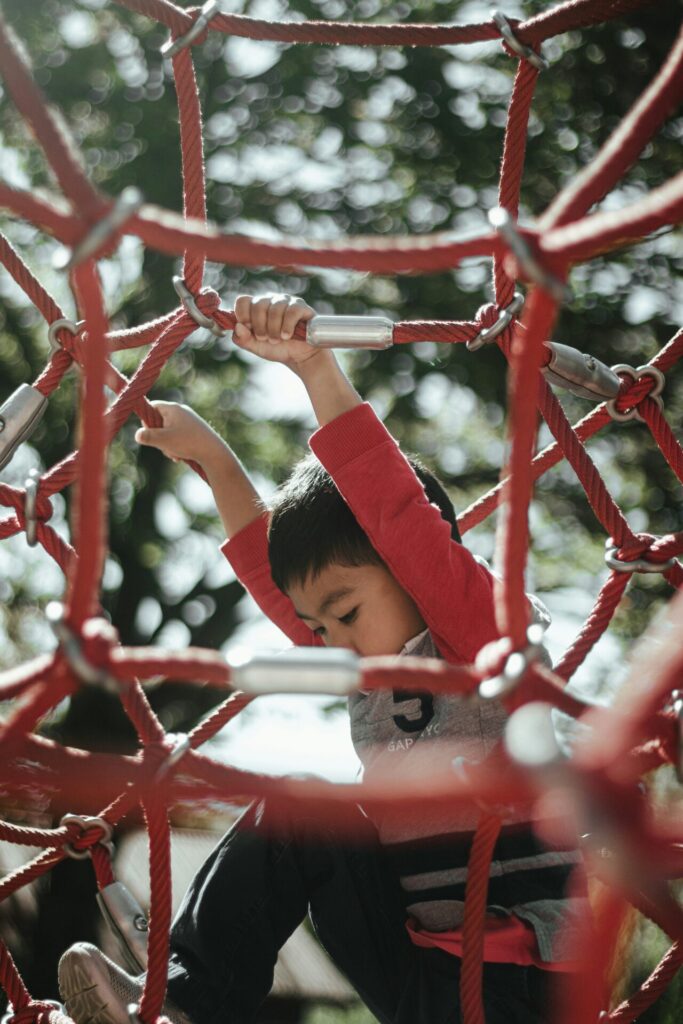
8. Consider engaging your child in environments where they are given a just-right challenge to grow. Your child needs some activity or environment where they are challenges.
For us this looks like a peaceful, nurturing, slower-scheduled home environment in the evenings, weekends, and summers. Then, the challenge for our kids comes in with school and the bus. Now, I’m not promoting leaving your child in a situation where they are being ill-treated (ex: bullying), but rather, allowing them to feel a bit of the ‘pain’ of having to wake up early on a school day or have a long bus ride home with a strict bus driver. Do you see the difference? Don’t swoop it at every chance like a mama bird to save the day!
9. Kids need real-world, activity-based challenges. Not a ‘safe’ life on screens. This one is pretty straightforward. A life on screens is not a ‘safer’ ‘better’ life. You must allow your kids to get out into the real-world and experience it. Don’t feel like you have to do this exactly how the culture tells you to do it, either. Sports are particularly troublesome for over-taking a child’s and family’s life. Maybe consider a lower-stress community recreation program!
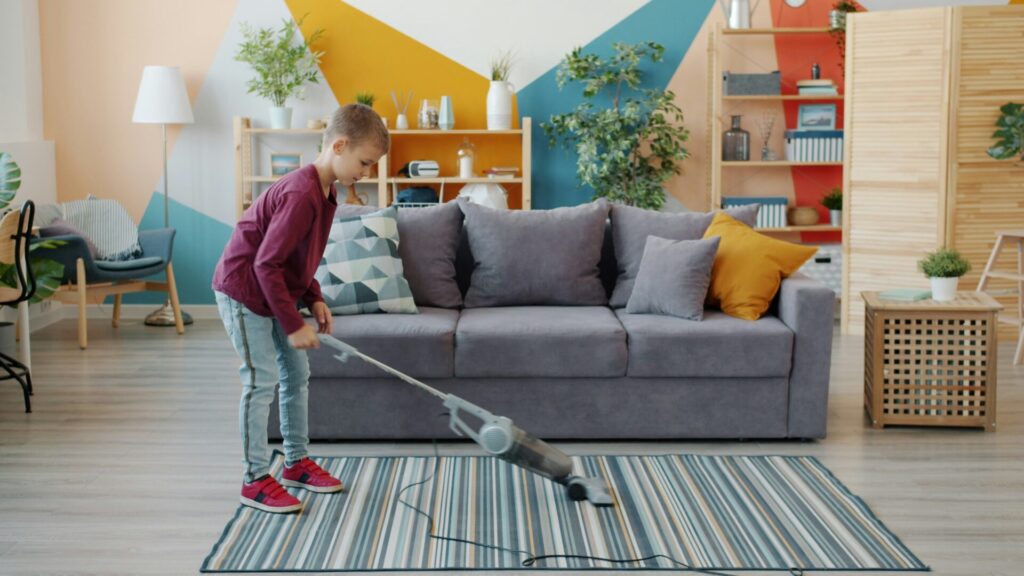
10. Don’t shy away from good, old-fashioned hard work for your child! Raking leaves, digging in the garden, shoveling snow, scrubbing a floor, cleaning the bathtub/shower, etc. are all excellent ideas (adapt as needed for your child’s age). These activities help your child build a sense of capability and pride in their work. Also, as a side benefit, these sensory activities are extremely calming and grounding for an overstimulated or anxious child.
11. Be patient and allow your child to build skills & confidence over time. This is a long term project of raising a resilient child. A just-right challenge that adapts to the child’s needs and capabilities over time slowly builds the foundation toward a more resilient adult!
12. One final and very important thought toward building a resilient child: don’t over-cling to your kids! Yes, pay attention, attune, love, nourish, be present, teach and guide them. Please, please, do these things and do them liberally. But, especially my fellow mamas, don’t cling to your children to fill your own void. Don’t live vicariously through them. They are not your spouse, your person. They are your child!
Your children deserve the freedom to live their own life one day as an adult. Help them build their confidence in independence over time by also expanding your life over time. You can and do have a life of your own to nourish. Continue to work on building yourself and seeing your future over time, even with tiny steps underneath the foundation of supporting your family’s overall growth.
This is SO hard, but this hard work is a gift to you, your children, and your family. Children love to see their parents thrive as they themselves expand into new levels of independence within and outside the home! I want to see you thrive, too. xo

That’s a wrap on my best ideas to help lay the best foundation possible for fostering a resilient child. It’s truly amazing what little humans, given the right challenge and nurturing overtime, can endure and overcome in this life. And, here’s to the next generation of confidently resilient adults!